

What is SafeBatt?
As battery energy storage expands to increasingly demanding markets and emerging battery chemistries start to be deployed, there is a critical need to understand and validate the safety of these new systems. This is becoming a bottleneck for safety-critical emerging Li-ion markets such as aerospace, and for the early adoption of new chemistries such as solid-state batteries and anode-free batteries. Safety regulations have not kept pace with the fast changing battery space and new approaches are required that are relevant to these new chemistries and applications.
The SafeBatt project is increasing the fundamental understanding of the root causes of cell failure and the mechanisms of failure propagation. This improved knowledge of the science of safety is informing the design of safer batteries and battery systems, as well as informing standards development and stakeholders such as regulatory bodies and first responders.
Working closely with industry partners, including SMEs and international OEMs from automotive and aerospace, the project’s research encompasses both physical testing and characterisation, and a significant expansion of its research into failure modelling and digital twins - developing world leading capability for digital safety testing.
SafeBatt is investigating early warning of failure (cause), failure (effect) and failure response (mitigation). Its remit includes disseminating research outputs, providing training and influencing policy, whilst stimulating dialogue between industry and academia and with new energy storage sectors.
SafeBatt is composed of five parallel work streams:

WP1: Cause/early warning
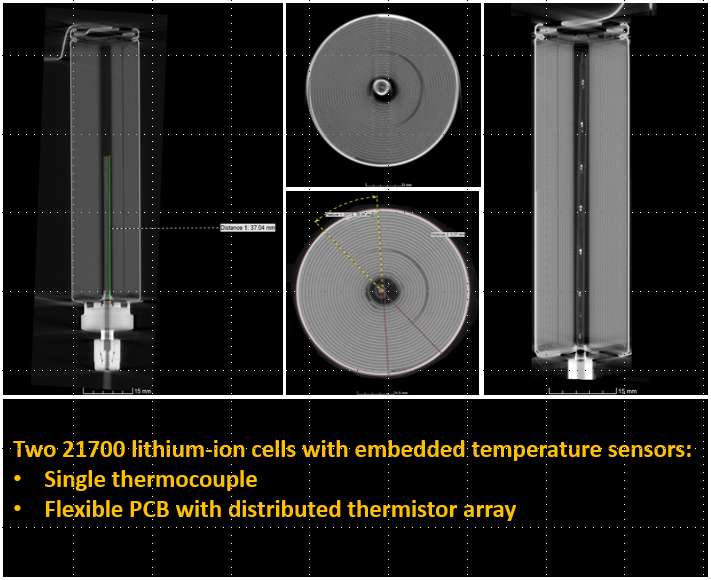
Develop techniques for early warning of failure (specifically internal short circuit and/or thermal runaway). Aims to demonstrate a “5-minute warning” capability from one or more of these techniques.
WP2: Effect/dynamic failure
Use state-of-the-art instrumentation and high speed techniques to study dynamic failure and the effects of failure and propagation, in order to inform the development of effective mitigation strategies.

WP3: Mitigation/failure response
Study the science of battery failure in real-world settings and at larger scales, investigating thermal runaway propagation at module and pack level, the toxicity of fires and runoff and how to deal with battery fires, and feeding this knowledge and experience directly to first responders and other stakeholders.

WP4: Modelling and digital twins
Develop a world class platform for digital failure testing – following patterns in CAE from the auto industry in crash testing, with parallels in battery abuse testing.

WP5: Stakeholder engagement
Collate project output and facilitate engagement activities with numerous stakeholders.
